Finishing a Des Moines basement without dealing with radon first is doing the project in the wrong order. Once people sleep and spend evenings down there, exposure hours multiply — and once drywall and carpet are in, every part of mitigation gets harder and more expensive. The right sequence costs almost nothing extra.
Testing before finishes
Test before design decisions are final. A 48-hour test costs little and tells you whether you are building a mitigation system into the project or just leaving room for one.
Test in closed-house conditions, in the basement, ideally during heating season. If the result is high, install and verify the system before insulation and drywall — watching an installer cut into a brand-new finished floor is the expensive version of this lesson.
Pipe routing
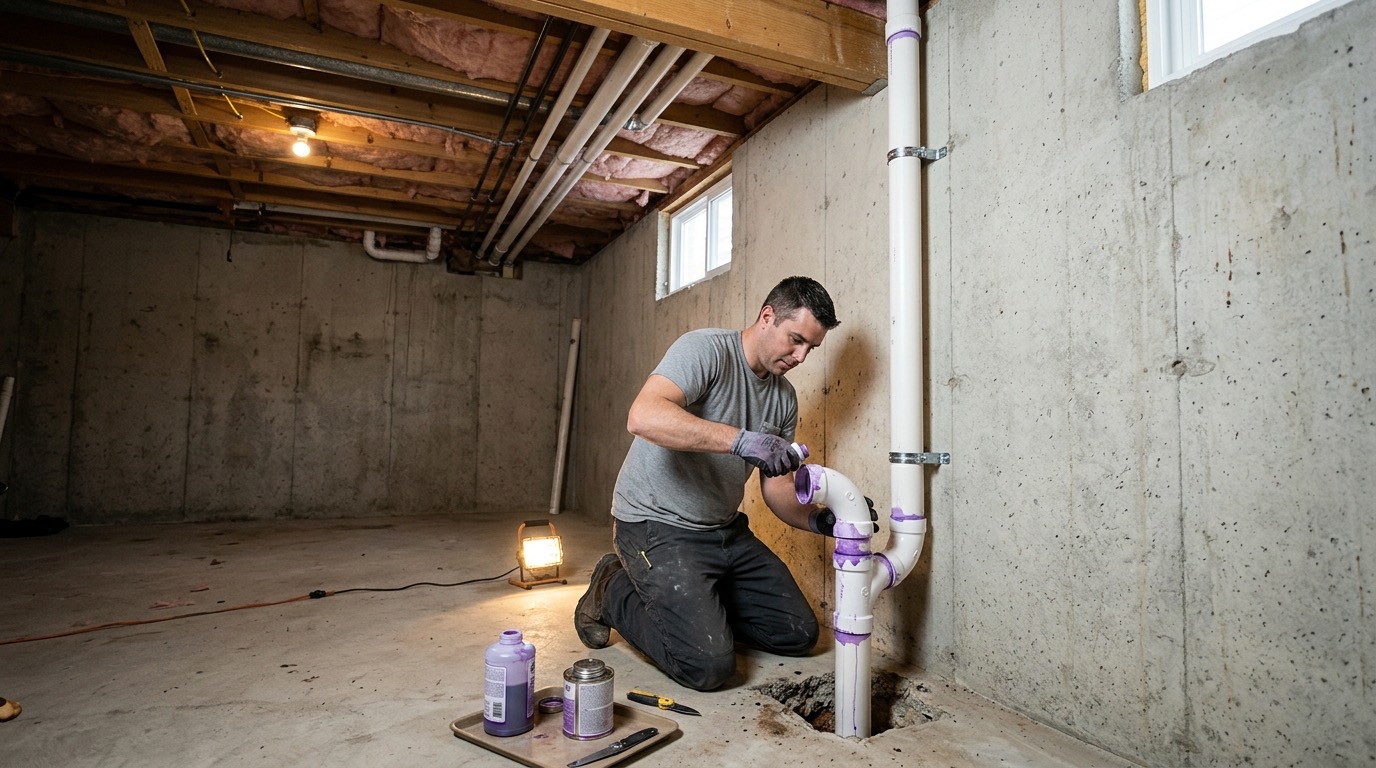
While the ceiling is open, a suction pipe can run from the slab to the attic through framed walls and chases invisibly. After finishing, the same pipe run means drywall surgery or an exterior pipe on the side of the house.
Even if today's number is low, roughing in a capped pipe from a sealed suction pit to the attic is cheap insurance during framing. If a future test comes back high, the fix is a fan and an electrician, not a remodel.
Sump and slab sealing
Seal while everything is exposed: caulk the slab-wall joint and any floor cracks, put an airtight lid on the sump basket, and seal penetrations around plumbing. These are minor line items during a remodel and miserable retrofits afterward.
If the design adds a basement bedroom, remember an egress window is required by code — and that a well-sealed, mitigated basement is also a drier, better-smelling one, since the same suction that removes radon pulls soil moisture away from the slab.
The order of operations that works
Test first, in closed-house conditions. Mitigate and verify if it is high. Rough in the pipe even if it is low. Seal the sump, slab joints, and penetrations while they are reachable. Then hang drywall.
None of those steps is expensive inside a remodel, and every one of them is expensive after it. The pipe chase that costs nothing during framing becomes a drywall repair later; the sump lid that takes twenty minutes becomes furniture-moving and carpet work.
A basement done in this order comes out healthier and drier — and the retest report goes in the same folder as the permits, where the next buyer of the house will be glad to find it.