A radon fan runs 24 hours a day for years, and most owners forget it exists — which is fine right up until it stops working and nothing announces the failure. The system has exactly one gauge and a couple of sounds worth knowing. This is the whole maintenance story.
Normal fan operation
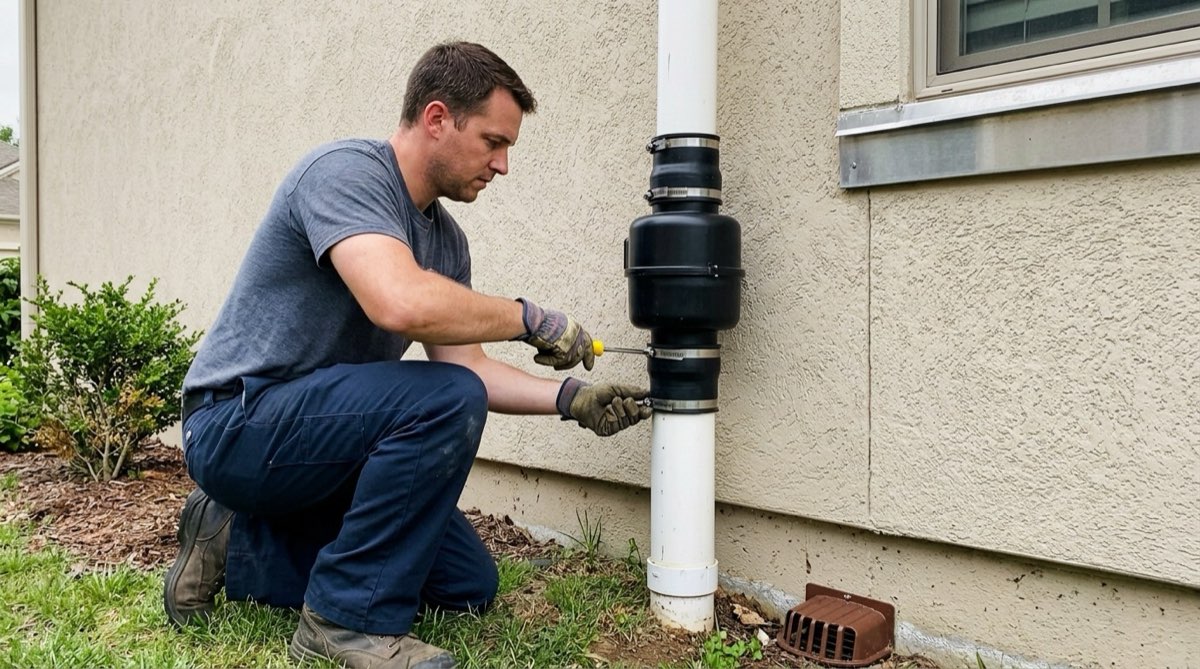
Healthy is a soft, steady hum you notice only when standing near the fan or the pipe. The fan never cycles off; a radon fan that stops was either unplugged, tripped a breaker, or failed.
Some water sound after rain is normal too — condensation and rainwater drain back down the pipe's slope past the fan. A persistent loud gurgle, though, means water is pooling in a low spot of a pipe run that was never sloped right, and it will eventually choke the airflow.
Manometer readings
The u-tube manometer on the pipe is a simple vacuum gauge: two fluid columns that should rest at different heights while the fan runs. Uneven means suction; the exact number matters less than the habit of glancing at it.
If the two columns sit level, the system is dead — no suction. Check the plug, switch, and breaker first; if power is fine and the manometer is still level, the fan itself is the problem. A piece of tape marking the normal fluid level makes any drift obvious at a glance.
When replacement may be needed
Radon fans typically last five to ten years. The usual death announcements are a grinding or rattling bearing noise, visible wobble, repeated breaker trips, or a manometer that reads lower month after month.
Replacement is a same-day job — swapping the fan on the existing pipe — not a new system. Retest after any fan swap to confirm the number came back down, and keep the manometer habit: it is the only part of the system that talks to you.
A maintenance routine that takes five minutes a year
Glance at the manometer when you walk past — once a month is plenty. Mark the normal level with tape so a change is obvious.
Once a year, stand near the fan and listen for thirty seconds: steady hum good, rattle or grind bad. Look at the visible pipe for sagging or joints pulling apart, and after big storms confirm the discharge above the roof is still intact.
Retest every two years and keep the reports together. That is the entire ownership burden of a radon system — less attention than a furnace filter, for the machine that manages the air your family breathes all winter.