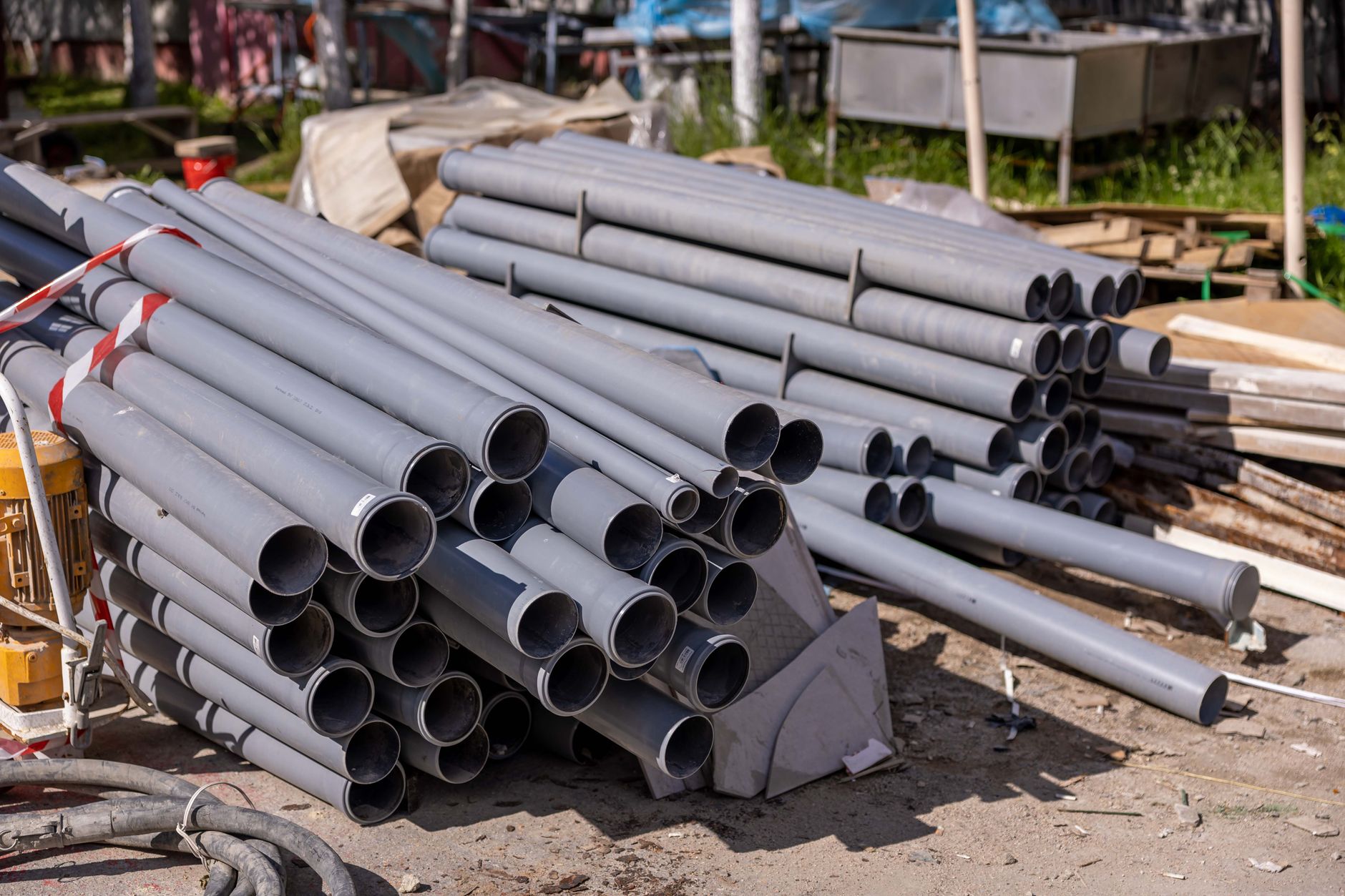
Almost every radon mitigation system does the same job: create a small vacuum under the foundation so soil gas gets collected and vented above the roof instead of seeping into the house. The variations exist because foundations vary. These are the three setups that cover nearly every house here.
Sub-slab systems
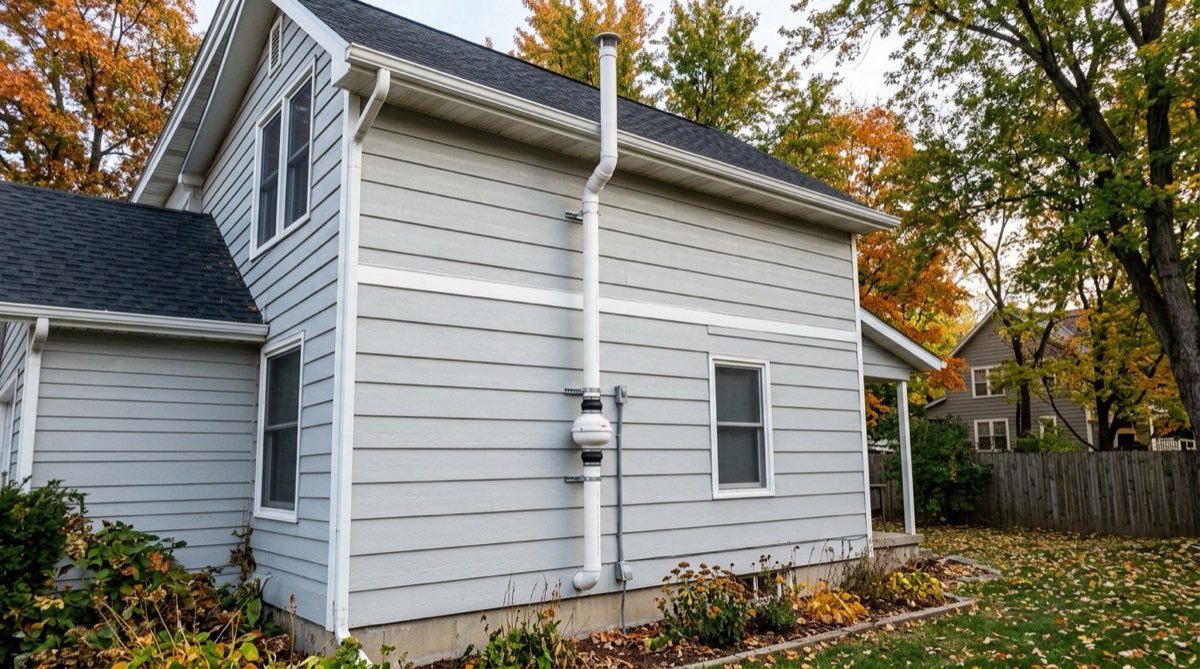
Sub-slab depressurization is the workhorse. The installer cores a hole through the basement slab, digs out a small suction pit, seals a PVC pipe into it, and runs that pipe to a continuously running inline fan that discharges above the eave.
Done right, the details are unglamorous but decisive: the suction pit sized to the gravel or soil under the slab, floor cracks and the slab-wall joint caulked, and a u-tube manometer on the pipe so you can see at a glance that the fan is pulling.
Sump and drain tile systems
Des Moines basements very often have a sump basket fed by drain tile, and that network of perforated pipe is a ready-made radon collector wrapping the whole footprint. Sealing the sump with an airtight lid and drawing suction from the basket often outperforms a slab-hole system — one suction point reaches everywhere the tile runs.
The lid gets a sealed pass-through for the pump cord and discharge line, and a gasketed viewing port so the pump can still be checked and serviced.
Crawl-space systems
Crawl spaces get sub-membrane depressurization: heavy plastic sheeting sealed across the exposed dirt, seams and edges taped to the foundation walls, with the suction pipe drawing from under the membrane.
Houses with a basement plus a crawl section — common in older Des Moines neighborhoods and additions — often need both approaches tied into one fan, which is a routing question worth settling during the estimate, not after the fan is mounted.
What every good system shares
Whatever the suction point, the parts that make a system trustworthy are the same: sealed entry routes so the fan is not fighting open holes, a discharge above the eave and away from windows, a u-tube manometer where you can see it, and a label with the install date and the installer's contact.
The fan itself never goes in the basement or living space — attic, garage, or outside only — so that any leak on the pressure side of the fan vents outdoors instead of into the house.
Ask the estimator which type your foundation calls for and why. The answer should reference your slab, sump, and layout — not a one-size price sheet.